Holy Frustration

There’s a kind of frustration that drains us. And then there’s a kind that awakens us. I’ve come to call it “holy frustration.”

It’s that persistent nudge one can’t quite shake. The quiet (or not-so-quiet) stirring in your spirit when something isn’t as it should be. It’s the moment you think, “Someone should do something about this,” and then slowly realize that the Spirit might be inviting you to be part of that “something.”

Holy frustration isn’t meant to leave us stuck. It’s meant to move us.

Throughout Scripture, we see that God often works through people who are unsettled by what they see. Moses was troubled by injustice. Nehemiah was heartbroken over a ruined city. The prophets burned with urgency over unfaithfulness and oppression. Jesus himself was moved with compassion when he saw the crowds “harassed and helpless.”

That inner discomfort isn’t a sign something is wrong with your faith. It may be a sign the Holy Spirit is at work within your faith. Sometimes the very thing that frustrates you is the doorway to your calling.

The good news is that God doesn’t just stir our hearts. God equips our hands. Scripture reminds us that we are empowered for action. 

Ephesians 2:10 says, “For we are what he has made us, created in Christ Jesus for good works, which God prepared beforehand to be our way of life.”

Galatians 6:9 encourages us to “not grow weary in doing what is right, for we will reap at harvest time, if we do not give up.” 

In Hebrews 13:16, we are reminded, “Do not neglect to do good and to share what you have, for such sacrifices are pleasing to God.”

God doesn’t plant holy frustration in us just to leave us restless. God provides what we need to respond. The Spirit nudges, but also strengthens, equips, guides, and sustains.

There is also a deeper kind of holy frustration many are feeling today. It’s one rooted not just in unmet needs, but in a distorted witness.

When faith becomes entangled with power in ways that diminish the Gospel…when nationalism is confused with faithfulness and discipleship…when exclusion is baptized as righteousness…when silence replaces courage, it’s right for something in us to feel unsettled. That unease may be the Holy Spirit refusing to let us grow comfortable with a diminished vision of God’s kingdom.

Holy frustration, in this sense, becomes courage. It gives us the strength to speak truth to power with humility and conviction. It empowers us to offer a better and more faithful theology rooted in love, justice, and the life of Jesus. It compels us to refuse to settle for what is loud or popular when it is not life-giving or Christ-centered

At the same time, when that holy frustration is stirred up, fear can easily creep in. But we must remember that we are called to “obey God rather than any human authority” (Acts 5:29). It can feel daunting when influential voices with large platforms and cultural power seem to reinforce a distorted message. But the witness of the Church has never depended on size or status. It has always depended on faithfulness.

Holy frustration does not call us to bitterness or division. It calls us to clarity, courage, and deeper love. It calls us to embody a Gospel that is bigger than fear, wider than borders, and rooted not in dominance, but in self-giving grace.

So, if you feel that tension, don’t dismiss it. It may be the Spirit inviting you not only to serve, but also to witness. Not only to build, but also to speak. Not only to act, but to help re-center the story on the way of Christ.

Holy frustration often starts individually, but it rarely ends there. You may feel a nudge to gather musicians and start something new in worship, organize a small group or Bible study, serve neighbors through food, care, or presence, advocate for those whose voices which are overlooked, repair something broken (literally or figuratively). 

The possibilities are as wide as God’s imagination. But at some point, our possibilities spurred on by holy frustration needs to become holy action. Holy frustration becomes holy action when we move from “someone should” to “let’s begin.” Or better yet, “let’s begin together.”

This isn’t about guilt or obligation. It’s about joy. There is deep, life-giving joy in joining God’s work in the world. When we step into what God is stirring in us, we often discover that we’re not alone. We learn that we are more capable than we thought. We find that even the small steps matter because God has a way of multiplying what we offer. What once felt like frustration becomes purpose. What once felt heavy becomes hopeful.

If something has been stirring in you, don’t ignore it. Pray about it. Talk about it with a trusted friend, counselor, or spiritual guide. Then, take one small step.

You don’t need a perfect plan. You don’t need to have it all figured out. You simply need to be willing. Because that holy frustration might just be the Spirit inviting you into something beautiful. May our holy frustrations become holy actions!
Why Churches Serve Coffee

My last couple of posts have been pretty heavy. So, this entry is a little more lighthearted!

There are a few passages in Scripture that feel almost too relatable. Acts 20:7–12 might be near the top of that list. It’s the one featuring a young man named Eutychus, a long-winded sermon, and…an unfortunate nap taken at the worst possible time.

Let’s set the scene.

The apostle Paul is in Troas, gathered with believers on the first day of the week for worship, teaching, and the breaking of bread. It’s evening, likely because most people worked during the day. They’re meeting in an upper room, lit not by soft LEDs or carefully curated sanctuary lighting, but by oil lamps. Luke even makes a point to tell us: “There were many lamps in the room.”

Translation: it was warm, crowded, a little stuffy, and probably smelled like burning oil.

And then…Paul starts preaching. And keeps preaching. And keeps going and going and going.

In fact, Scripture says he talked “until midnight.” Not started at midnight…went until midnight. Which means Eutychus didn’t doze off during a tidy 20-minute homily. This was a full-on marathon sermon.

Now, before we judge Eutychus too harshly, let’s be honest: warm room, flickering lights, late hour, long sermon…we’ve all been there. This is precisely why, in many churches today, the thermostat is under lock and key. It’s not about control. It’s about preventing biblical reenactments. Nobody wants to be responsible for a second-story incident during the sermon.

Eutychus, seated in the window (perhaps trying to get a little fresh air), slowly drifts off…until he falls.

Luke, the author of Acts (and a physician, mind you), doesn’t sugarcoat it: the young man was picked up dead.

Now the story takes a dramatic turn. Paul goes down, throws himself on the boy, embraces him, and declares, “Do not be alarmed, for his life is in him.” It’s a moment that echoes the ministries of prophets like Elijah and Elisha and God’s life-giving power breaking into a desperate situation.

And then, because this is one of the most unintentionally humorous passages in Scripture, Paul goes back upstairs. He breaks bread. He eats. And then he keeps talking. Until dawn.

Imagine being in that congregation. You’ve just witnessed a fatal fall, followed by a miracle resurrection…and Paul’s response is essentially, “Alright, where were we?”

There’s something deeply human about this story. It reminds us that the early church wasn’t a collection of polished, perfect worship experiences. It was real people, in real rooms, dealing with real limitations (fatigue, long days, imperfect conditions). Faith wasn’t neat and tidy. It was lived.

It also gives us a glimpse into the intensity of early Christian gatherings. These weren’t casual drop-ins. People were hungry and desperate to hear the good news, to learn, to be together. Paul knew he was leaving soon, and he had more to say than could fit into a neatly timed service.

Still…there’s grace here for both preacher and listener.

For listeners: yes, try to stay awake. Maybe don’t sit in the window if you’re prone to nodding off. And if the sanctuary gets a little cool, just know it’s for your safety.

For preachers: perhaps a gentle reminder that length does matter. We don’t have to say everything in one message!

But at the center of it all is the miracle.

Eutychus is restored to life. The community is “not a little comforted,” which is Luke’s understated way of saying, “they were overwhelmed with relief and awe.” This isn’t just a quirky story about a sleepy teenager. It’s a testimony to the life-giving power of God. Even in the middle of human frailty, distraction, and yes, even boredom, God is still at work.

So the next time the sermon runs a little long, or your eyelids start to get heavy, take heart: at least no one has fallen out of a window.

And even more importantly, God is still bringing life, still meeting us in ordinary (and occasionally drowsy) moments, still holding us together as a community.

Though…just to be safe, maybe grab an extra cup of coffee before worship.

A Follow Up: One Pastor’s Response

While we had stir fry on Tuesday, April 7, it was my favorite TACO Tuesday in some time. Because for a brief moment, however fragile, however complicated, there was a pause.

A two-week ceasefire.

In a world that has felt like it’s been inching toward the unthinkable, even a pause can feel like grace.

But let’s be honest about the kind of grace this is.

This is not the peace of Christ.

This is not reconciliation.

This is not justice rolling down like waters.

This is a temporary halt to a crisis we helped create.

Let’s refuse to rewrite the narrative. The Strait of Hormuz was open before this escalation. The threats of annihilation were not necessary. The rhetoric of “all hell raining down” was not diplomacy. It was domination dressed up as strength.

When President Trump or anyone else suggests that this moment is the result of brilliant negotiation, we need the courage to say what is true: You do not get credit for putting out a fire you poured gasoline on.

Especially not when that fire was ignated with language that flirted openly with genocide (the destruction of an entire people). There is nothing strategic, clever, or praiseworthy about threatening mass death. Ever.

The ends do not justify the means. Not in the Kingdom of God. Not in any moral framework worth holding onto.

And yet… here we are.

Two weeks.

Jesus once said: If you have faith the size of a mustard seed… (Matthew 17:20)

So maybe that’s what this is. A mustard seed moment. A fragile, trembling hope that something better could emerge, that cooler heads might prevail, that violence might be de-escalated, that lives might be spared.

If I’m being honest (yes, some pastors still aspire to always tell the truth), my doubts have been louder than my hopes lately.

Because we’ve seen how quickly words turn back into weapons. We’ve seen how easily truth is bent, twisted, and discarded. We’ve seen how moral lines are crossed and then justified in the name of patriotism or even faith.

So yes, I am praying. But I am praying with eyes wide open.

Let’s not celebrate this as a win. This is a pause. A fragile interruption. A breath between threats.

If we treat it like a victory lap, we will miss the urgency of the moment.

Nothing about the underlying posture has changed. The rhetoric has not been repented of. The threats have not been owned. The moral failure has not been confessed. Until those things happen, the danger remains.

Let’s name something else that is deeply troubling…I see many “faithful” people defending these words, suggesting they weren’t meant literally, that they were just strategic, just posturing, just part of the game.

But this is exactly the problem.

When threats of destruction are dismissed as “just words,” we have already lost our moral footing. This type of leadership is unacceptable…no matter how you spin it, soften it, or sanitize it.

As followers of Jesus, we simply cannot tolerate this. Not because we are partisan. But because we are Christian.

So what do we do with these two weeks? We do not relax. We do not scroll past.We do not move on. We act.

This is a pause to:

Pray: not vague, passive prayers, but bold prayers for peace, for restraint, for transformation of hearts hardened by power, greed and ego.

Plan: how will we, as people of faith and conscience, continue to show up?

Communicate: call, write, and meet with those who represent us in Congress. Make it unmistakably clear: this is not acceptable. (I could write several posts expressing my disappointment, but not surprise, by the response of my senators – silence, and representative- a proclamation of unwavering support for Trump’s actions).

Advocate: for policies and leaders that value human life over political posturing.

Let the world know that this is embarrassing. This is un-American. This is not Christian. This is unacceptable.

There is another truth we cannot ignore.

Many are still defending this behavior…not reluctantly, but enthusiastically while also claiming the name of Jesus.

Let’s be clear: this is not Christianity. This is idolatry. It is the elevation of nation, power, and personality above the teachings of Christ.

Jesus said: By this everyone will know that you are my disciples, if you love one another. (John 13:35) He didn’t stop there. He expanded that love to include neighbors and enemies alike.

Christian nationalism, by contrast, makes room for love…but only of self. It draws tight boundaries around who matters and who doesn’t. It blesses force where Jesus commands mercy. We cannot serve both.

We often say, “this is not who we are.”

But if we’re honest, this is exactly who we are right now.

Maybe it’s not who we aspire to be. Maybe it’s not the deepest truth of who we could become. But it is who we have become…

A people willing to excuse cruelty.

A people willing to justify threats.

And unless there is real, collective transformation (moral, spiritual, political) this is who we will continue to be.

A people willing to trade integrity for power.

We also need to abandon the illusion that we are automatically the “good guys.” Moral superiority is not a birthright. It is earned through humility, justice, and compassion. And right now, when we threaten devastation, alienate allies, and justify it all with religious language, we are not reflecting the light we claim to carry. We are obscuring it.

Here’s a free pro tip: Take a hard look at your social media feed.

If you see voices celebrating threats of destruction…

If you see people excusing dehumanizing language…

If you see “Christians” cheering tactics that contradict Christ…

Click that unfollow button…or at least “mute” them…even if just for a season…

Not out of spite, but out of spiritual clarity.

What we normalize shapes us. What we tolerate forms us. What we consume disciples us.

Two weeks. That’s what we have.

Two weeks to prepare, not for celebration, but for what may come next if nothing changes.

Two weeks to raise our voices. Two weeks to demand better. Two weeks to embody a different way.

Because this is not okay. It has never been okay. And it will never be okay.

The Church must not grow weary. The people must not grow silent. The truth must not be softened.

The ceasefire is not the end of the story. It is the moment where we decide whether we will keep telling the truth or start believing the lie.

When Words Become Weapons: One Pastor’s Response to Power, Threats, and the Way of Jesus

There are moments when silence becomes complicity.

This is one of those moments.

Recent public statements from President Donald Trump, posted on social media platforms, have crossed beyond political rhetoric into something far more dangerous. Threats that a “whole civilization will die tonight,” that people will be “living in Hell,” and that “all hell will rain down on them” are not merely words. They are declarations shaped by fear, fueled by ego, and untethered from the moral vision of the Gospel.

Let us be clear: this is not the way of Jesus.

Jesus does not threaten annihilation. Jesus does not revel in destruction. Jesus does not speak of entire peoples as expendable.

Instead, Jesus says: Love your enemies and pray for those who persecute you. (Matthew 5:44) Blessed are the peacemakers, for they will be called children of God. (Matthew 5:9) Those who live by the sword will die by the sword. (Matthew 26:52)

The contrast could not be more stark. What we are witnessing is not strength. It is the ancient, familiar language of empire. It is Pharaoh hardening his heart. It is Nebuchadnezzar exalting his power. It is Caesar mistaking domination for peace.

Scripture has always warned us about leaders who choose this path: Woe to those who call evil good and good evil. (Isaiah 5:20) When the righteous are in authority, the people rejoice; but when the wicked rule, the people groan. (Proverbs 29:2)

When leaders trade humility for hubris, wisdom for rage, and diplomacy for threats, the consequences are not abstract…they are measured in human lives.

These statements also force us to confront uncomfortable but necessary truths…

First, they clarify that Donald Trump is not a Christian leader (regardless of the weak defense provided by Paula White-Cain…who is really just a grifter disguised as a pastor). Christianity is not defined by labels or political alliances, but by fruit (Matthew 7:16). The fruit here, threats of mass death, dehumanizing language, and reckless escalation does not resemble the Spirit of Christ.

Second, they expose the myth that the United States is inherently a “Christian nation.” A nation that blesses threats of devastation, that baptizes violence in the language of righteousness, and that confuses power with moral authority has lost its theological bearings. A press secretary wearing a cross necklace and a Secretary of the Department of War claiming God’s providence does not provide a Christian blanket of protection. Lies are still lies.

The Kingdom of God is not synonymous with any nation. Jesus made that clear: My kingdom is not from this world. (John 18:36)

We must also resist the temptation to soften our language. There is a time for nuance and there is a time for truth.

This is a time for truth.

When a leader speaks casually about the destruction of an entire civilization, that is not faithfulness. That is not strategy. That is evil.

When rhetoric escalates toward violence instead of seeking peace, that is not strength. That is moral failure.

And when such language is defended or excused by those claiming the name of Christ, the witness of the Church is compromised.

Even more troubling is the inversion of reality. When calls are made for “less radicalized minds” to prevail, we must ask plainly: who is acting with recklessness, hostility, and apocalyptic imagination? The radicalization on display is not coming from those calling for restraint. It is coming from the very voice issuing these threats.

To pastors, Christian leaders, bishops, and especially evangelical leaders: this is our moment. We cannot remain silent.

The Gospel we preach on Sunday must have something to say about the words spoken on Monday. If we claim allegiance to Jesus, then we must reject language and policies that contradict His way so clearly.

Silence in the face of this rhetoric is not neutrality. It is endorsement. Let us speak up. Loudly. Clearly. Courageously.

To members of Congress…Democrats, Republicans, and Independents alike…this is also your responsibility. The Constitution does not grant unchecked power to any one individual, especially not in matters that could lead to catastrophic conflict. If rhetoric is escalating toward violence, it is your duty to intervene, to restrain, and to restore sanity to the process. Reasonable, level-headed leadership is not weakness. It is the last safeguard against disaster.

When allies begin to distance themselves, when the global community expresses concern, when the tone of leadership shifts from diplomacy to domination, these are warning signs. We ignore them at our peril.

The combination of figures like Donald Trump and Pete Hegseth shaping military posture and public rhetoric should give us pause. Not because disagreement is dangerous, but because recklessness is. This is about more than Iran. It is about the soul of a nation and the lives of countless people.

The prophet Joshua once stood before the people and said: Choose this day whom you will serve. (Joshua 24:15)

That question remains. Will we serve the gods of power, fear, and domination? Or will we follow the crucified Christ…the one who chose love over violence, mercy over vengeance, and sacrifice over supremacy?

Enough is enough. We cannot baptize cruelty. We cannot sanctify threats. We cannot pretend that this is normal.

If we are to be the Church, then we must be the Church…prophetic, courageous, and unafraid to speak truth to power.

Because when words become weapons, silence is not an option.

When Power Becomes an Idol

As Lent begins, a season marked by repentance, reflection, and courageous truth-telling, I find myself carrying both grief and hope. This sacred season invites us to name what is broken, within us and within the Church, while refusing to surrender to despair. What follows is a hope-filled lament born from that tension: an honest reckoning with idolatry and power, and a stubborn commitment to the peaceable, merciful way of Christ.

I grew up in a faith tradition that told me integrity mattered. Not as a suggestion. Not as a partisan strategy. But as an essential principle of Christian discipleship.

Character mattered. Truth mattered. Sexual ethics mattered. Morality mattered. Humility mattered. How you treated the vulnerable mattered.

In my tradition, I was taught that faith was personal and social. I was taught that following Jesus meant loving God, loving neighbor and loving my enemies. I was taught that holiness was not about private piety alone but about the transformation of both hearts and systems. I was raised to believe that you could not separate morality from leadership.

And now I watch large segments of the Church align themselves with leaders and movements that embody the opposite of what we once called Christian character.

We excuse lying if it protects our agenda.
We tolerate cruelty if it secures political victories.
We dismiss racism as exaggeration.
We ignore misogyny as personality.
We defend vengeance as strength.

And when anyone raises concern, they are told they are naïve, woke, liberal, divisive, or unfaithful.

But let’s say what this is: This is not just political disagreement. This is the seduction of Christian nationalism. This is the idolatry of power.

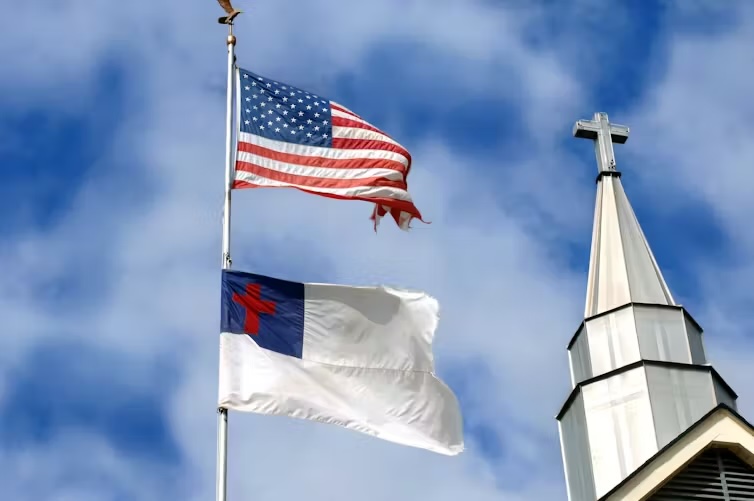
Christian nationalism confuses the Kingdom of God with the kingdoms of this world. It baptizes partisan platforms as if they are divine mandates. It equates cultural dominance with faithfulness. It wraps the cross in a flag and calls it revival.

But the Kingdom Jesus proclaimed was never secured by coercion, fear, or domination.

In fact, when Jesus was offered political power in the wilderness, he refused it. When Peter reached for a sword, Jesus told him to put it away. When Pilate asked if he was a king, Jesus responded that his kingdom was not of this world.

And yet today, many Christians speak as if the survival of the gospel depends on seizing political control. That is not discipleship. That is fear. And when fear drives faith, power becomes an idol.

As United Methodists, we inherit a different legacy. John Wesley preached personal holiness and social holiness. Methodists have organized against slavery, advocated for prison reform and insisted that faith without works of mercy was hollow.

The early Methodists fed the hungry, educated children, visited prisoners, and cared for the sick…not to dominate culture, but to embody Christ. Today, United Methodists make a commitment to “resist evil, injustice, and oppression in whatever forms they present themselves.” We are called to dismantle racism, protect human dignity, pursue peace, and care for the marginalized. We believe in prevenient grace (God’s grace already at work in every person). We believe in sanctifying grace (we are capable of growth, repentance, and transformation).

I’ve come to believe through this United Methodist lens that sanctification cannot coexist with unrepentant cruelty. Holiness cannot coexist with the celebration of corruption.

If we preach that character matters in our churches but excuse immorality in our politics, we are not being pragmatic. We are being inconsistent. And people see it. If they don’t see it now, they’ll see it in the future and find themselves questioning the institution of the Church. 

Here is the question that keeps echoing in my mind: How do I reconcile the Christians who taught me morality mattered with their unwavering loyalty to what looks so blatantly immoral today?

The grief of the fading of the Church I once knew is real. It feels like betrayal when the moral framework that shaped you suddenly bends around power. It feels destabilizing when those who warned against idolatry now kneel at the altar of influence.

But here is what I am learning: The failure of the Church to embody Christ does not mean Christ has failed. Institutions drift. Movements lose their way. Leaders grasp for control. But the gospel remains.

Maybe this moment is an invitation. An invitation to disentangle Jesus from nationalism. An invitation to separate the cross from the flag. An invitation to confess where we have confused access to power with faithfulness to Christ.

The Church is at her worst when she seeks control. She is at her best when she seeks mercy.

Jesus did not say, “Blessed are the culture warriors.” He said, “Blessed are the peacemakers.”

He did not say, “Blessed are those who dominate.” He said, “Blessed are the meek.”

He did not say, “You will know them by their political victories.” He said, “You will know them by their love.”

So what do we do?

We practice what Wesley called “works of mercy.” We feed the hungry. We visit the imprisoned. We advocate for the oppressed. We tell the truth, even when it implicates “our side.” We refuse to dehumanize, even when we are dehumanized. We resist the idolatry of power by embodying the humility of Christ.

Peace is not passivity. It is active resistance to chaos.

Mercy is not weakness. It is moral courage.

Hope is not denial. It is stubborn fidelity to the way of Jesus.

Hope, for me, no longer rests in political saviors or institutional perfection. It rests in quiet faithfulness. In congregations that choose hospitality over hostility. In Christians who confess when they are wrong. In communities that love their neighbors without checking their voting record. In pastors who preach integrity even when it costs them.

If you are questioning the Church, you are not alone.

If you are grieving what you see, you are not faithless.

If you are clinging to the belief that integrity still matters, that compassion still matters, that truth still matters…that longing itself is evidence of grace.

The idolatry of power will not have the final word. Nationalism will not have the final word. Fear will not have the final word.

Love will.

And if we must choose between cultural dominance and Christlike mercy, we choose mercy.

If we must choose between political loyalty and gospel integrity, we choose integrity.

If we must choose between the idol of power and the Prince of Peace, we choose the Prince of Peace.

Every time.