Holy Frustration

There’s a kind of frustration that drains us. And then there’s a kind that awakens us. I’ve come to call it “holy frustration.”

It’s that persistent nudge one can’t quite shake. The quiet (or not-so-quiet) stirring in your spirit when something isn’t as it should be. It’s the moment you think, “Someone should do something about this,” and then slowly realize that the Spirit might be inviting you to be part of that “something.”

Holy frustration isn’t meant to leave us stuck. It’s meant to move us.

Throughout Scripture, we see that God often works through people who are unsettled by what they see. Moses was troubled by injustice. Nehemiah was heartbroken over a ruined city. The prophets burned with urgency over unfaithfulness and oppression. Jesus himself was moved with compassion when he saw the crowds “harassed and helpless.”

That inner discomfort isn’t a sign something is wrong with your faith. It may be a sign the Holy Spirit is at work within your faith. Sometimes the very thing that frustrates you is the doorway to your calling.

The good news is that God doesn’t just stir our hearts. God equips our hands. Scripture reminds us that we are empowered for action. 

Ephesians 2:10 says, “For we are what he has made us, created in Christ Jesus for good works, which God prepared beforehand to be our way of life.”

Galatians 6:9 encourages us to “not grow weary in doing what is right, for we will reap at harvest time, if we do not give up.” 

In Hebrews 13:16, we are reminded, “Do not neglect to do good and to share what you have, for such sacrifices are pleasing to God.”

God doesn’t plant holy frustration in us just to leave us restless. God provides what we need to respond. The Spirit nudges, but also strengthens, equips, guides, and sustains.

There is also a deeper kind of holy frustration many are feeling today. It’s one rooted not just in unmet needs, but in a distorted witness.

When faith becomes entangled with power in ways that diminish the Gospel…when nationalism is confused with faithfulness and discipleship…when exclusion is baptized as righteousness…when silence replaces courage, it’s right for something in us to feel unsettled. That unease may be the Holy Spirit refusing to let us grow comfortable with a diminished vision of God’s kingdom.

Holy frustration, in this sense, becomes courage. It gives us the strength to speak truth to power with humility and conviction. It empowers us to offer a better and more faithful theology rooted in love, justice, and the life of Jesus. It compels us to refuse to settle for what is loud or popular when it is not life-giving or Christ-centered

At the same time, when that holy frustration is stirred up, fear can easily creep in. But we must remember that we are called to “obey God rather than any human authority” (Acts 5:29). It can feel daunting when influential voices with large platforms and cultural power seem to reinforce a distorted message. But the witness of the Church has never depended on size or status. It has always depended on faithfulness.

Holy frustration does not call us to bitterness or division. It calls us to clarity, courage, and deeper love. It calls us to embody a Gospel that is bigger than fear, wider than borders, and rooted not in dominance, but in self-giving grace.

So, if you feel that tension, don’t dismiss it. It may be the Spirit inviting you not only to serve, but also to witness. Not only to build, but also to speak. Not only to act, but to help re-center the story on the way of Christ.

Holy frustration often starts individually, but it rarely ends there. You may feel a nudge to gather musicians and start something new in worship, organize a small group or Bible study, serve neighbors through food, care, or presence, advocate for those whose voices which are overlooked, repair something broken (literally or figuratively). 

The possibilities are as wide as God’s imagination. But at some point, our possibilities spurred on by holy frustration needs to become holy action. Holy frustration becomes holy action when we move from “someone should” to “let’s begin.” Or better yet, “let’s begin together.”

This isn’t about guilt or obligation. It’s about joy. There is deep, life-giving joy in joining God’s work in the world. When we step into what God is stirring in us, we often discover that we’re not alone. We learn that we are more capable than we thought. We find that even the small steps matter because God has a way of multiplying what we offer. What once felt like frustration becomes purpose. What once felt heavy becomes hopeful.

If something has been stirring in you, don’t ignore it. Pray about it. Talk about it with a trusted friend, counselor, or spiritual guide. Then, take one small step.

You don’t need a perfect plan. You don’t need to have it all figured out. You simply need to be willing. Because that holy frustration might just be the Spirit inviting you into something beautiful. May our holy frustrations become holy actions!

When Words Become Weapons: One Pastor’s Response to Power, Threats, and the Way of Jesus

There are moments when silence becomes complicity.

This is one of those moments.

Recent public statements from President Donald Trump, posted on social media platforms, have crossed beyond political rhetoric into something far more dangerous. Threats that a “whole civilization will die tonight,” that people will be “living in Hell,” and that “all hell will rain down on them” are not merely words. They are declarations shaped by fear, fueled by ego, and untethered from the moral vision of the Gospel.

Let us be clear: this is not the way of Jesus.

Jesus does not threaten annihilation. Jesus does not revel in destruction. Jesus does not speak of entire peoples as expendable.

Instead, Jesus says: Love your enemies and pray for those who persecute you. (Matthew 5:44) Blessed are the peacemakers, for they will be called children of God. (Matthew 5:9) Those who live by the sword will die by the sword. (Matthew 26:52)

The contrast could not be more stark. What we are witnessing is not strength. It is the ancient, familiar language of empire. It is Pharaoh hardening his heart. It is Nebuchadnezzar exalting his power. It is Caesar mistaking domination for peace.

Scripture has always warned us about leaders who choose this path: Woe to those who call evil good and good evil. (Isaiah 5:20) When the righteous are in authority, the people rejoice; but when the wicked rule, the people groan. (Proverbs 29:2)

When leaders trade humility for hubris, wisdom for rage, and diplomacy for threats, the consequences are not abstract…they are measured in human lives.

These statements also force us to confront uncomfortable but necessary truths…

First, they clarify that Donald Trump is not a Christian leader (regardless of the weak defense provided by Paula White-Cain…who is really just a grifter disguised as a pastor). Christianity is not defined by labels or political alliances, but by fruit (Matthew 7:16). The fruit here, threats of mass death, dehumanizing language, and reckless escalation does not resemble the Spirit of Christ.

Second, they expose the myth that the United States is inherently a “Christian nation.” A nation that blesses threats of devastation, that baptizes violence in the language of righteousness, and that confuses power with moral authority has lost its theological bearings. A press secretary wearing a cross necklace and a Secretary of the Department of War claiming God’s providence does not provide a Christian blanket of protection. Lies are still lies.

The Kingdom of God is not synonymous with any nation. Jesus made that clear: My kingdom is not from this world. (John 18:36)

We must also resist the temptation to soften our language. There is a time for nuance and there is a time for truth.

This is a time for truth.

When a leader speaks casually about the destruction of an entire civilization, that is not faithfulness. That is not strategy. That is evil.

When rhetoric escalates toward violence instead of seeking peace, that is not strength. That is moral failure.

And when such language is defended or excused by those claiming the name of Christ, the witness of the Church is compromised.

Even more troubling is the inversion of reality. When calls are made for “less radicalized minds” to prevail, we must ask plainly: who is acting with recklessness, hostility, and apocalyptic imagination? The radicalization on display is not coming from those calling for restraint. It is coming from the very voice issuing these threats.

To pastors, Christian leaders, bishops, and especially evangelical leaders: this is our moment. We cannot remain silent.

The Gospel we preach on Sunday must have something to say about the words spoken on Monday. If we claim allegiance to Jesus, then we must reject language and policies that contradict His way so clearly.

Silence in the face of this rhetoric is not neutrality. It is endorsement. Let us speak up. Loudly. Clearly. Courageously.

To members of Congress…Democrats, Republicans, and Independents alike…this is also your responsibility. The Constitution does not grant unchecked power to any one individual, especially not in matters that could lead to catastrophic conflict. If rhetoric is escalating toward violence, it is your duty to intervene, to restrain, and to restore sanity to the process. Reasonable, level-headed leadership is not weakness. It is the last safeguard against disaster.

When allies begin to distance themselves, when the global community expresses concern, when the tone of leadership shifts from diplomacy to domination, these are warning signs. We ignore them at our peril.

The combination of figures like Donald Trump and Pete Hegseth shaping military posture and public rhetoric should give us pause. Not because disagreement is dangerous, but because recklessness is. This is about more than Iran. It is about the soul of a nation and the lives of countless people.

The prophet Joshua once stood before the people and said: Choose this day whom you will serve. (Joshua 24:15)

That question remains. Will we serve the gods of power, fear, and domination? Or will we follow the crucified Christ…the one who chose love over violence, mercy over vengeance, and sacrifice over supremacy?

Enough is enough. We cannot baptize cruelty. We cannot sanctify threats. We cannot pretend that this is normal.

If we are to be the Church, then we must be the Church…prophetic, courageous, and unafraid to speak truth to power.

Because when words become weapons, silence is not an option.

When Power Becomes an Idol

As Lent begins, a season marked by repentance, reflection, and courageous truth-telling, I find myself carrying both grief and hope. This sacred season invites us to name what is broken, within us and within the Church, while refusing to surrender to despair. What follows is a hope-filled lament born from that tension: an honest reckoning with idolatry and power, and a stubborn commitment to the peaceable, merciful way of Christ.

I grew up in a faith tradition that told me integrity mattered. Not as a suggestion. Not as a partisan strategy. But as an essential principle of Christian discipleship.

Character mattered. Truth mattered. Sexual ethics mattered. Morality mattered. Humility mattered. How you treated the vulnerable mattered.

In my tradition, I was taught that faith was personal and social. I was taught that following Jesus meant loving God, loving neighbor and loving my enemies. I was taught that holiness was not about private piety alone but about the transformation of both hearts and systems. I was raised to believe that you could not separate morality from leadership.

And now I watch large segments of the Church align themselves with leaders and movements that embody the opposite of what we once called Christian character.

We excuse lying if it protects our agenda.
We tolerate cruelty if it secures political victories.
We dismiss racism as exaggeration.
We ignore misogyny as personality.
We defend vengeance as strength.

And when anyone raises concern, they are told they are naïve, woke, liberal, divisive, or unfaithful.

But let’s say what this is: This is not just political disagreement. This is the seduction of Christian nationalism. This is the idolatry of power.

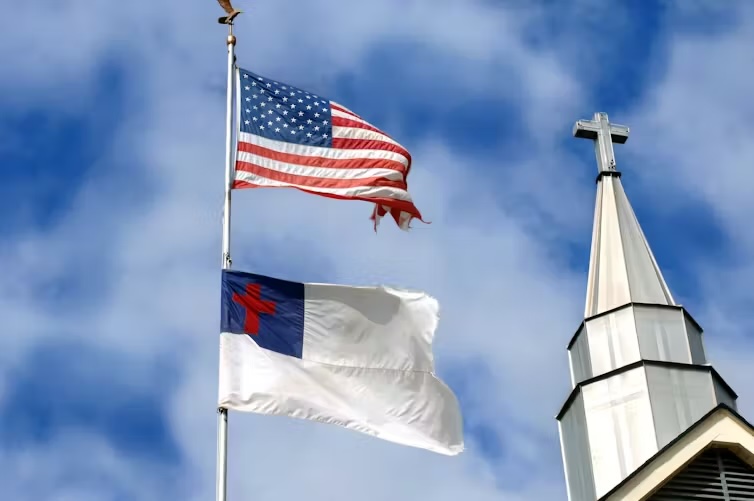
Christian nationalism confuses the Kingdom of God with the kingdoms of this world. It baptizes partisan platforms as if they are divine mandates. It equates cultural dominance with faithfulness. It wraps the cross in a flag and calls it revival.

But the Kingdom Jesus proclaimed was never secured by coercion, fear, or domination.

In fact, when Jesus was offered political power in the wilderness, he refused it. When Peter reached for a sword, Jesus told him to put it away. When Pilate asked if he was a king, Jesus responded that his kingdom was not of this world.

And yet today, many Christians speak as if the survival of the gospel depends on seizing political control. That is not discipleship. That is fear. And when fear drives faith, power becomes an idol.

As United Methodists, we inherit a different legacy. John Wesley preached personal holiness and social holiness. Methodists have organized against slavery, advocated for prison reform and insisted that faith without works of mercy was hollow.

The early Methodists fed the hungry, educated children, visited prisoners, and cared for the sick…not to dominate culture, but to embody Christ. Today, United Methodists make a commitment to “resist evil, injustice, and oppression in whatever forms they present themselves.” We are called to dismantle racism, protect human dignity, pursue peace, and care for the marginalized. We believe in prevenient grace (God’s grace already at work in every person). We believe in sanctifying grace (we are capable of growth, repentance, and transformation).

I’ve come to believe through this United Methodist lens that sanctification cannot coexist with unrepentant cruelty. Holiness cannot coexist with the celebration of corruption.

If we preach that character matters in our churches but excuse immorality in our politics, we are not being pragmatic. We are being inconsistent. And people see it. If they don’t see it now, they’ll see it in the future and find themselves questioning the institution of the Church. 

Here is the question that keeps echoing in my mind: How do I reconcile the Christians who taught me morality mattered with their unwavering loyalty to what looks so blatantly immoral today?

The grief of the fading of the Church I once knew is real. It feels like betrayal when the moral framework that shaped you suddenly bends around power. It feels destabilizing when those who warned against idolatry now kneel at the altar of influence.

But here is what I am learning: The failure of the Church to embody Christ does not mean Christ has failed. Institutions drift. Movements lose their way. Leaders grasp for control. But the gospel remains.

Maybe this moment is an invitation. An invitation to disentangle Jesus from nationalism. An invitation to separate the cross from the flag. An invitation to confess where we have confused access to power with faithfulness to Christ.

The Church is at her worst when she seeks control. She is at her best when she seeks mercy.

Jesus did not say, “Blessed are the culture warriors.” He said, “Blessed are the peacemakers.”

He did not say, “Blessed are those who dominate.” He said, “Blessed are the meek.”

He did not say, “You will know them by their political victories.” He said, “You will know them by their love.”

So what do we do?

We practice what Wesley called “works of mercy.” We feed the hungry. We visit the imprisoned. We advocate for the oppressed. We tell the truth, even when it implicates “our side.” We refuse to dehumanize, even when we are dehumanized. We resist the idolatry of power by embodying the humility of Christ.

Peace is not passivity. It is active resistance to chaos.

Mercy is not weakness. It is moral courage.

Hope is not denial. It is stubborn fidelity to the way of Jesus.

Hope, for me, no longer rests in political saviors or institutional perfection. It rests in quiet faithfulness. In congregations that choose hospitality over hostility. In Christians who confess when they are wrong. In communities that love their neighbors without checking their voting record. In pastors who preach integrity even when it costs them.

If you are questioning the Church, you are not alone.

If you are grieving what you see, you are not faithless.

If you are clinging to the belief that integrity still matters, that compassion still matters, that truth still matters…that longing itself is evidence of grace.

The idolatry of power will not have the final word. Nationalism will not have the final word. Fear will not have the final word.

Love will.

And if we must choose between cultural dominance and Christlike mercy, we choose mercy.

If we must choose between political loyalty and gospel integrity, we choose integrity.

If we must choose between the idol of power and the Prince of Peace, we choose the Prince of Peace.

Every time.

In Defense of Testamints: Why Christians Are Committed to Making Alternatives No One Asked For

Whenever culture does, well, just about anything, somewhere a Christian committee springs into action!

“There’s a popular song on the radio…We need a Christian version.”

“There’s a movie people like….Get Kirk Cameron on the phone.”

“There’s a halftime show…Quick! Assemble the Praise & Production Team.”

Thus begins the sacred work of Christian alternatives. It’s become a parallel universe where everything exists, just slightly worse.

Over the years, we Christians have given the world Christian rock that insists it’s not worship music (but definitely is); Christian movies where the villain is almost always an atheist professor; Christian theater that mistakes volume for conviction…And yes, Testamints! The breath mint that boldly asks, What if we offer the world salvation…but minty?”

The motivation is almost always sincere (with a few exceptions where people just see it as a quicker way to make money and/or rise to fame…see the Christian music episode of South Park for an example). We want Christian values represented. We want something wholesome. We want to protect our kids.

But instead of creating art that’s beautiful, complex, and honest, we often settle for art that is inoffensive, over-explained, and opposed to metaphor.

You know the look. You know the sound. Christian art is often identifiable within seconds…not because it’s daring, but because it’s desperately afraid someone might miss the point.

We avoid silence. We remove any ambiguity. We always resolve the tension. 

Every character arc is a sermon illustration with legs. Every song chorus sounds like it was approved by three subcommittees, a doctrinal statement and a greeting card company. If it isn’t under-produced, it’s over-produced.

Let’s be honest, many Christian films make even the most forgettable Hallmark movie feel like a bold, experimental risk worthy of an Oscar. 

This is wild, because Christians claim to be telling the greatest story ever told! We have a book filled with incredible stories about a God who enters suffering, embraces complexity, and refuses easy answers. We have tremendous source material.

Yet, our storytelling and songwriting often feels like it doesn’t trust either God or the audience.

Christian art doesn’t struggle because it’s Christian. It struggles because it confuses clarity with depth and calls it faithfulness.

In 2025, the top Christian streaming artist, Forrest Frank, pulled in 1.2 billion U.S. streams. That’s genuinely impressive. He writes fun and catchy songs that reach a large audience. I mean, even I learned the trending Forrest Frank TikTok dance! His theology and political leanings may not be everyone’s cup of tea…but his music is definitely better than most Christian offerings out there.

Then, there’s 2025’s overall top streaming artist, Bad Bunny, with 19.8 billion streams. In case people were wondering, this is a large reason why he was invited to the Super Bowl…he’s the most popular recording artist in the world right now!

This is not oppression. This is not spiritual warfare. This is not the mainstream culture silencing Christians.

This is what happens when something connects beyond a niche subculture. The Super Bowl Halftime Show Planning Committee didn’t overlook us. The charts are not persecuting us. They are simply unimpressed.

There was a time when the church didn’t make “alternatives,” it made masterpieces. It invested in the fine arts.

Bach wasn’t writing “Christian-adjacent” music. Mozart wasn’t trying to be “safe.” They were crafting beauty because the church believed beauty mattered.

Today, we sometimes replace excellence with branding and call it ministry.

The recent halftime “alternative,” which originally sounded like it was going to be a Christian praise and worship gathering, until it suddenly became patriotic, perfectly captured our confusion.

It wasn’t rejected by the mainstream because it was Christian or patriotic. It wasn’t rejected because the world hates Jesus and refuses to change the channel to TBN. It wasn’t rejected because of persecution.

It was rejected because it wasn’t compelling. Parading an alternative as family-friendly and patriotic and then inviting Kid Rock to sing “Bawitaba” seems anything but family-friendly! 

Calling something an “alternative” does not make it art. Insisting people should like it because it’s not the mainstream does not make it good.

Here’s a wild idea…Christians should be able to recognize goodness even when it wasn’t made for us. We should be able to spot and celebrate joy, talent, creativity, energy, and beauty whether it was created as an act of worship or not. 

Sometimes that shows up in a hymn or praise chorus. Sometimes it shows up in a novel. Sometimes it shows up in a halftime show that looks nothing like Sunday morning. And that’s okay.

We are not being persecuted because our favorite artist wasn’t invited to the Super Bowl. And if “family-friendly” is the goal, defending questionable picks with “But he also sang a song that reflects his personal growth” is not mature spiritual discernment. That’s just creative rationalization and justification.

At the center of Christian faith is the Incarnation…not God creating a safer, parallel universe, but God entering this one. This messy, loud, complicated, and real universe. Maybe we should follow Jesus, and instead of creating a safe Christian alternative, we should enter into the one that is all around us…with the light, love, goodness and creativity of the God who called it all into existence.

There are strands of Christian theology that insist that all truth is God’s truth, beauty is never wasted, and the image of God shows up in unexpected places.

The Gospel does not need to be dumbed down, sanitized, or rebranded to survive.

So maybe the call is simple. Maybe we should stop making Christian alternatives. Stop settling for “good enough.” Stop confusing safety with faithfulness.

Maybe we should make art that’s honest. Let’s make art that’s excellent. Let’s make art worthy of the story we’re telling.

Because the Good News doesn’t need breath mints. It needs beauty.

This is the Line

Before anything else, let me say this plainly: If the church has hurt you…If you are grieving what faith used to be for you…If you feel disappointed, exhausted, angry, or quietly heartbroken by Christians or Christian institutions…

There is room for you. There is space for your grief. There is no rush to “fix” it or spiritualize it away.

Jesus never scolded people for being wounded by religion. He consistently made room for them.

Many of us are carrying church-shaped bruises these days. Some are fresh. Some go way back. Some are the result of hypocrisy, exclusion, abuse of power, or faith used as a weapon rather than a healing balm. If you’ve stepped back, grown quieter, or are holding onto a mustard seed of faith with open hands instead of clenched fists—that doesn’t make you faithless. It makes you honest.

So, let’s move forward…together, with compassion for ourselves and one another. 

In the midst of all the noise, outrage, and confusion swirling around faith, politics and culture, I want to name my line.

Love.

Not vaguely sentimental love. Not politeness. Not “bless your heart” spirituality. Not the “real love” that Mary J. Blige sang about…But the kind of love Jesus lived, taught, and embodied. The love that costs something and gives something at the same time.

Some may argue that Scripture can be contradictory and unclear. However, when it comes to love, Jesus was remarkably clear.

“You shall love the Lord your God with all your heart, soul, mind, and strength… and you shall love your neighbor as yourself” (Mark 12:30–31).

“By this everyone will know that you are my disciples, if you have love for one another” (John 13:35).

“Love your enemies, do good to those who hate you” (Luke 6:27). 

“Be merciful, just as your Father is merciful” (Luke 6:36).

This is the line Jesus draws again and again.

It’s not about who’s in and who’s out (though He does explore what happens to those who share or withhold love in Matthew 25:31-46).

It’s not about who’s right and who’s wrong…or who wins or dominates or shouts the loudest.

It’s about one word…Love.

That doesn’t mean love never confronts or avoids telling the truth. Jesus was loving and honest, compassionate and courageous. But love was always the point. 

If what we’re doing doesn’t look like love, sound like love, or move toward love, it’s time to pause and reassess.

Here’s some good news that often gets lost: following Jesus was never meant to feel like carrying the weight of the world alone. We will face triumphs and trials, joy and pain (“give it to ’em, Rob Base!“), calm and chaos…but we don’t have to face these things alone.

Jesus invites the tired and burdened to rest (Matthew 11:28). He feeds people before he teaches them. He notices outsiders. He laughs at dinner tables. He tells stories with humor, irony, and surprise. He welcomes the marginalized and outcast. He trusts flawed people and seems oddly unconcerned with perfection.

The United Methodist tradition puts language to this grace-filled reality. We believe that God’s grace meets us before we know we need it (prevenient grace), walks with us as we grow (sanctifying grace), and never lets go when we stumble (justifying grace). We believe (or at least I believe) that grace is not fragile, love is not scarce, and hope is not naïve.

So maybe this season isn’t about fixing the church all at once…or at all? Maybe it’s about being the church in small, faithful ways.

We can show the love Jesus calls us to embody when we choose kindness when cruelty is easier, practice generosity in a culture of scarcity, listen instead of label, laugh when joy feels rebellious, authentically show up with a commitment to be open and honest. 

Maybe this love Jesus calls us to is about embodying the fruits of the Spirit, not as a checklist, but as a way of life: love, joy, peace, patience, kindness, generosity, faithfulness, gentleness, and self-control (Galatians 5:22–23). It’s not flashy or trendy (or at least it shouldn’t be), but it does change lives.

If you’re still reading this…please know that you don’t have to carry the whole church on your shoulders. You don’t have to argue with everyone. You don’t have to explain yourself constantly. You’re allowed to choose love. You’re allowed to choose joy. You’re allowed to choose Jesus, even when others distort him.

This is the line I’m committing to…to love God and love people, to tell the truth with humility, to make room for grace, and to trust that the Spirit is still at work. 

If you ever find yourself saying, “I’m not sure where I fit anymore,” you’re not alone. Here’s some good news…The table Jesus sets is wide. There’s room for doubt and hope, laughter and tears, faith that’s confident and faith that’s hanging on by a thread.

This is the line…or at least my line…Love still leads us. Grace still holds us. Hope still matters. The Spirit is still moving

And I still believe that is more than enough.