As Lent begins, a season marked by repentance, reflection, and courageous truth-telling, I find myself carrying both grief and hope. This sacred season invites us to name what is broken, within us and within the Church, while refusing to surrender to despair. What follows is a hope-filled lament born from that tension: an honest reckoning with idolatry and power, and a stubborn commitment to the peaceable, merciful way of Christ.
I grew up in a faith tradition that told me integrity mattered. Not as a suggestion. Not as a partisan strategy. But as an essential principle of Christian discipleship.
Character mattered. Truth mattered. Sexual ethics mattered. Morality mattered. Humility mattered. How you treated the vulnerable mattered.
In my tradition, I was taught that faith was personal and social. I was taught that following Jesus meant loving God, loving neighbor and loving my enemies. I was taught that holiness was not about private piety alone but about the transformation of both hearts and systems. I was raised to believe that you could not separate morality from leadership.
And now I watch large segments of the Church align themselves with leaders and movements that embody the opposite of what we once called Christian character.
We excuse lying if it protects our agenda.
We tolerate cruelty if it secures political victories.
We dismiss racism as exaggeration.
We ignore misogyny as personality.
We defend vengeance as strength.
And when anyone raises concern, they are told they are naïve, woke, liberal, divisive, or unfaithful.
But let’s say what this is: This is not just political disagreement. This is the seduction of Christian nationalism. This is the idolatry of power.
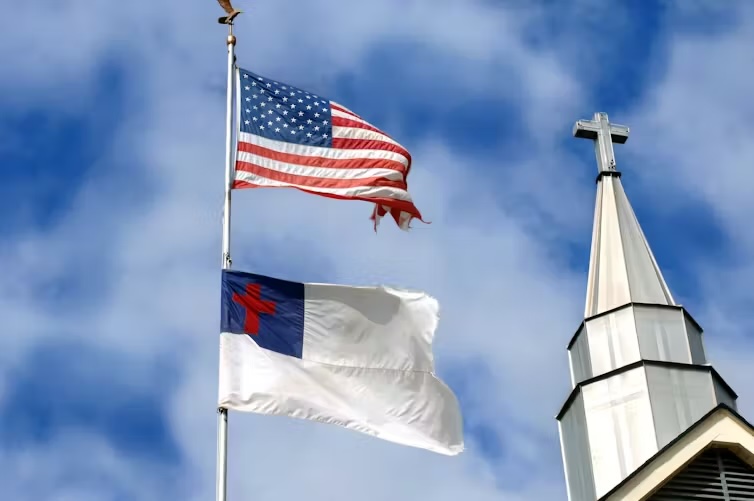
Christian nationalism confuses the Kingdom of God with the kingdoms of this world. It baptizes partisan platforms as if they are divine mandates. It equates cultural dominance with faithfulness. It wraps the cross in a flag and calls it revival.
But the Kingdom Jesus proclaimed was never secured by coercion, fear, or domination.
In fact, when Jesus was offered political power in the wilderness, he refused it. When Peter reached for a sword, Jesus told him to put it away. When Pilate asked if he was a king, Jesus responded that his kingdom was not of this world.
And yet today, many Christians speak as if the survival of the gospel depends on seizing political control. That is not discipleship. That is fear. And when fear drives faith, power becomes an idol.
As United Methodists, we inherit a different legacy. John Wesley preached personal holiness and social holiness. Methodists have organized against slavery, advocated for prison reform and insisted that faith without works of mercy was hollow.
The early Methodists fed the hungry, educated children, visited prisoners, and cared for the sick…not to dominate culture, but to embody Christ. Today, United Methodists make a commitment to “resist evil, injustice, and oppression in whatever forms they present themselves.” We are called to dismantle racism, protect human dignity, pursue peace, and care for the marginalized. We believe in prevenient grace (God’s grace already at work in every person). We believe in sanctifying grace (we are capable of growth, repentance, and transformation).
I’ve come to believe through this United Methodist lens that sanctification cannot coexist with unrepentant cruelty. Holiness cannot coexist with the celebration of corruption.
If we preach that character matters in our churches but excuse immorality in our politics, we are not being pragmatic. We are being inconsistent. And people see it. If they don’t see it now, they’ll see it in the future and find themselves questioning the institution of the Church.
Here is the question that keeps echoing in my mind: How do I reconcile the Christians who taught me morality mattered with their unwavering loyalty to what looks so blatantly immoral today?
The grief of the fading of the Church I once knew is real. It feels like betrayal when the moral framework that shaped you suddenly bends around power. It feels destabilizing when those who warned against idolatry now kneel at the altar of influence.
But here is what I am learning: The failure of the Church to embody Christ does not mean Christ has failed. Institutions drift. Movements lose their way. Leaders grasp for control. But the gospel remains.
Maybe this moment is an invitation. An invitation to disentangle Jesus from nationalism. An invitation to separate the cross from the flag. An invitation to confess where we have confused access to power with faithfulness to Christ.
The Church is at her worst when she seeks control. She is at her best when she seeks mercy.
Jesus did not say, “Blessed are the culture warriors.” He said, “Blessed are the peacemakers.”
He did not say, “Blessed are those who dominate.” He said, “Blessed are the meek.”
He did not say, “You will know them by their political victories.” He said, “You will know them by their love.”
So what do we do?
We practice what Wesley called “works of mercy.” We feed the hungry. We visit the imprisoned. We advocate for the oppressed. We tell the truth, even when it implicates “our side.” We refuse to dehumanize, even when we are dehumanized. We resist the idolatry of power by embodying the humility of Christ.
Peace is not passivity. It is active resistance to chaos.
Mercy is not weakness. It is moral courage.
Hope is not denial. It is stubborn fidelity to the way of Jesus.
Hope, for me, no longer rests in political saviors or institutional perfection. It rests in quiet faithfulness. In congregations that choose hospitality over hostility. In Christians who confess when they are wrong. In communities that love their neighbors without checking their voting record. In pastors who preach integrity even when it costs them.
If you are questioning the Church, you are not alone.
If you are grieving what you see, you are not faithless.
If you are clinging to the belief that integrity still matters, that compassion still matters, that truth still matters…that longing itself is evidence of grace.
The idolatry of power will not have the final word. Nationalism will not have the final word. Fear will not have the final word.
Love will.
And if we must choose between cultural dominance and Christlike mercy, we choose mercy.
If we must choose between political loyalty and gospel integrity, we choose integrity.
If we must choose between the idol of power and the Prince of Peace, we choose the Prince of Peace.
Every time.
 Tuesdays with Morris